
- Case Studies
Reviving Accounts Receivable for a 15-Location Behavioral Health Organization
Table of Contents
About the Client
The Accounts Receivable Challenge
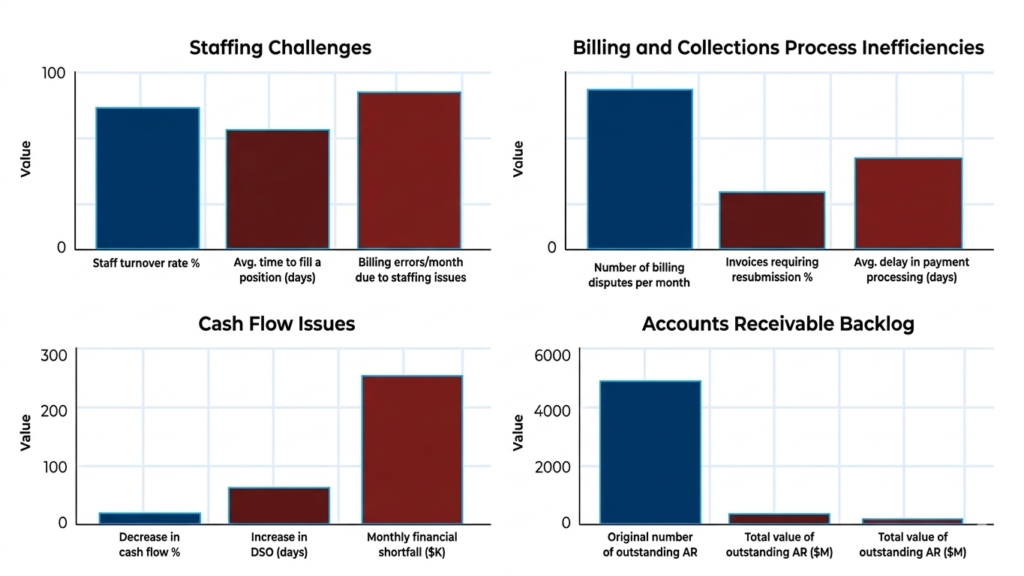
The organization was dealing with a significant backlog of old accounts receivable. Staffing challenges had contributed to delays, inconsistent follow-ups, billing errors, and inefficiencies across the AR process.
$3.1 Million in Outstanding AR
The organization had approximately 5,000 outstanding AR accounts with a total value of $3.1 million. The average age of the outstanding AR was approximately 120 days, creating significant pressure on cash flow.
Staffing Challenges
Staffing issues were contributing to operational inefficiencies, including:
- 25% annual staff turnover
- Approximately 60 days to fill an open position
- Around 150 billing errors per month attributed to staffing issues
These challenges made it difficult to maintain consistent AR follow-up and resolution.
Billing and Collection Inefficiencies
The organization was also experiencing:
- Approximately 80 billing disputes per month
- 30% of invoices requiring resubmission
- An average 45-day delay in payment processing
These inefficiencies contributed to the growing AR backlog and made timely collections more difficult.
Cash Flow Pressure
The financial impact of the AR backlog was significant.
The organization reported:
- A 20% decrease in cash flow over six months
- DSO increasing from 45 to 90 days
- A monthly financial shortfall of approximately $250,000
With AR continuing to age, the organization needed an immediate strategy for recovery as well as a long-term process to prevent another backlog.
The Solution: A Comprehensive AR Management Approach
After the engagement began, Medientsky Billing conducted a comprehensive assessment of the organization’s AR processes. The objective was to identify the underlying causes of the backlog and develop a targeted strategy for recovering outstanding revenue while improving the organization’s overall AR workflow. The solution included five key components.
1. AR Audit and Analysis
The first step was a detailed audit of the existing accounts receivable. The assessment examined:
- Denial patterns
- Payment delays
- Follow-up processes
- Billing inefficiencies
- Existing tracking mechanisms
The audit identified inconsistent follow-ups, a lack of standardized procedures, and inadequate tracking as key contributors to the AR backlog. These findings provided the foundation for the recovery strategy.
2. Dedicated AR Management Team
Medientsky Billing assigned a specialized team to focus on the client’s old AR. The team included experienced AR management specialists with knowledge of behavioral health billing and collections. Having a dedicated team focused specifically on the backlog allowed outstanding accounts to receive consistent attention and follow-up.
3. Process Optimization
Existing workflows were reviewed and improved to make AR management more consistent and efficient. The process improvements included:
- Streamlining AR workflows
- Automating repetitive tasks
- Establishing clearer AR follow-up guidelines
- Developing standardized operating procedures
- Improving tracking and accountability
These changes helped create a more structured approach to accounts receivable management.
4. Staff Training and Support
The client’s internal staff received training on accounts receivable management best practices. The goal was not only to address the existing backlog but also to help prevent similar issues from developing in the future. The training focused on giving staff the knowledge and tools required to manage AR more proactively.
5. Technology Integration
Advanced RCM technology was integrated to improve visibility into the client’s accounts receivable. The technology supported:
- Real-time AR tracking
- Automated follow-up reminders
- Real-time analytics
- Detailed reporting
Improved visibility gave the organization greater control over its AR processes and helped the team identify outstanding issues more efficiently.
Technology and Staff Expertise: Driving the Impact
The combination of specialized AR expertise, improved workflows, staff training, and technology created a more structured approach to AR management. The dedicated AR team focused on clearing the existing backlog while the optimized processes and technology helped improve the way outstanding accounts were tracked and managed. The impact became visible across several key performance areas.
Reduced Days Sales Outstanding
DSO decreased from 90 days to 45 days within the first six months. The reduction indicated a faster payment collection cycle and contributed to improved cash flow.
Improved Cash Flow
Monthly collections increased by 35%, providing the organization with greater financial stability.
Increased Operational Efficiency
Streamlined workflows and automation contributed to a reported 40% increase in operational efficiency.The improvement allowed the internal team to spend less time dealing with administrative AR tasks.
Higher Collection Rate
The overall collection rate improved by 20%. The improvement was attributed to stronger follow-up processes and the focused attention provided by the dedicated AR management team.
Results: $2.5 Million in Old AR Recovered
The engagement produced measurable financial and operational improvements.
$2.5 Million Recovered
More than 80% of the old AR was recovered within the first year, representing approximately $2.5 million recovered from the original $3.1 million outstanding balance.
50% Reduction in Write-Offs
The write-off rate for uncollectible accounts decreased from 10% to 5%, representing a 50% reduction. This allowed the organization to retain more of its potential revenue.
25% Increase in Revenue
The organization reported an overall 25% increase in revenue, attributed largely to improvements in its accounts receivable management processes.
30% Increase in Staff Satisfaction
Internal staff reported a 30% increase in job satisfaction. With the AR burden reduced, staff were able to focus more on patient care and other important responsibilities. The improvement in workload also contributed to better morale and staff retention.
Continuous Improvement
Conclusion
For this 15-location behavioral health organization, staffing challenges and inefficient AR processes had contributed to $3.1 million in outstanding accounts receivable with an average age of 120 days. Medientsky Billing addressed the challenge through a combination of AR auditing, dedicated specialists, workflow optimization, staff training, and technology integration. Within the first year, the organization recovered approximately $2.5 million in old AR, reduced DSO from 90 to 45 days, improved monthly collections by 35%, and reduced its write-off rate from 10% to 5%. The results demonstrate that effective AR management requires more than collecting outstanding balances. It also requires identifying the process and staffing issues that allow AR to accumulate in the first place. For healthcare organizations facing similar accounts receivable challenges, a structured and proactive AR management strategy can help improve collections, strengthen cash flow, and create more sustainable revenue cycle operations.
Share it on
Search Latest Case Studies
Highlights
- Old AR $3.1M, average AR age 120 days.
- Dedicated AR team and process optimization.
- 80% old AR recovery, $2.5M collected.
Client Specs
- Location: Florida
- Specialty: Behavioral Health
- EHR: Incredible
- Average collections: 300K per month
Work with medical billers who understand your EHR's billing process backwards and forwards
Get paid Three times faster with our 24/7 medical billing services.
Avail Free RCM Audit Worth $2,000! Check out 19 different KPI reports that stops your cash flow.