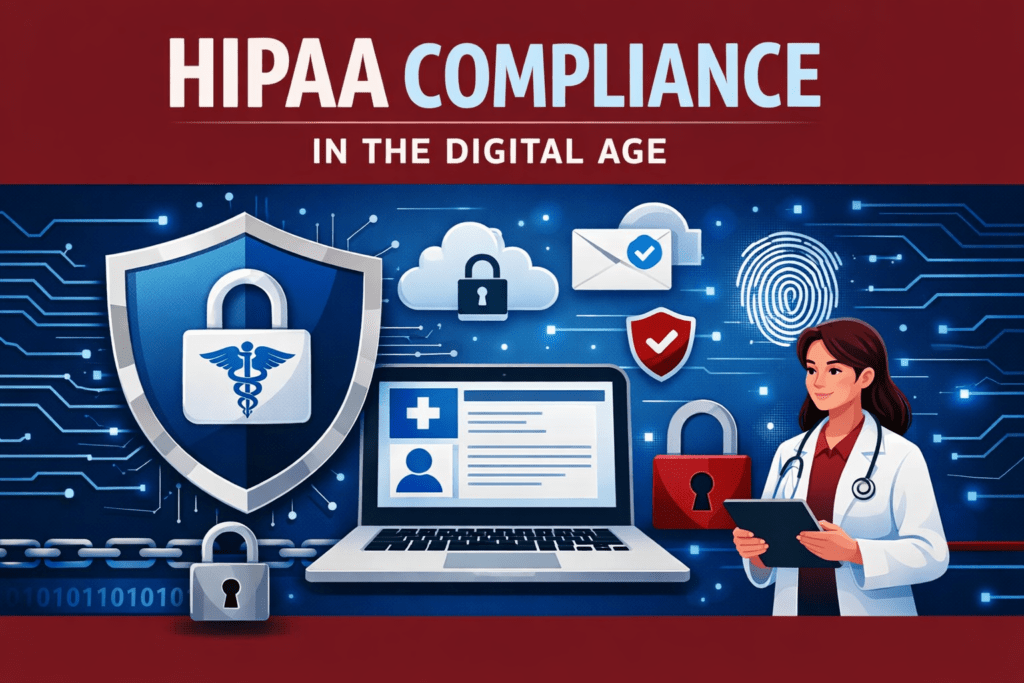
HIPAA Compliance in the Digital Age
Table of Contents Introduction Risks Strategies Conclusion The Health Insurance Portability and Accountability Act (HIPAA) was enacted long before the rise of telehealth, ubiquitous cloud storage, and sophisticated cyberattacks. Today, maintaining HIPAA compliance requires a modern understanding of digital risks. A single breach can result in massive fines and irrevocable damage to your practice’s reputation. Here’s your guide to navigating HIPAA compliance in the digital age. The New Frontier of Digital Risks: Telehealth & Remote Work: Video platforms and home networks must be secure. Cloud-Based EHR/PM Systems: You are responsible for your vendor’s compliance (they must be a “Business Associate”). Mobile Devices: Lost smartphones or tablets with PHI are a major liability. Phishing & Ransomware: Cybercriminals specifically target healthcare data. Essential Strategies for Modern HIPAA Compliance: 1. Conduct a Thorough Risk Analysis (Annually & After Changes) This is not optional. You must regularly identify where PHI is stored, transmitted, and received—especially across new digital channels—and assess vulnerabilities. 2. Fortify Your Business Associate Agreements (BAAs)Any vendor that touches your PHI (billing companies, cloud hosts, IT support) must have a signed BAA. This contract legally binds them to safeguard your data. 3. Implement a “Zero-Trust” Security MindsetAssume no device or network is inherently safe. Use: Strong encryption for data at rest and in transit. Multi-factor authentication (MFA) for all system access. Strict access controls based on the “minimum necessary” rule. 4. Train Staff RelentlesslyYour team is your first line of defense. Training must go beyond basics to cover: Identifying sophisticated phishing attempts. Secure practices for remote work. Proper use of encrypted communication and file sharing. 5. Prepare for the Worst with an Incident Response PlanAssume a breach will happen. Your plan must detail steps for containment, notification (to patients, HHS, and potentially media), and recovery to minimize damage. The Bottom Line: HIPAA compliance in the digital age is an active, ongoing process, not a one-time checklist. It’s about building a culture of security where technology, policies, and people work together to protect patient trust. Concerned about your practice’s digital compliance? Our team specializes in secure, HIPAA-compliant medical billing. Let us handle the complexities of the revenue cycle so you can focus on patient care with confidence.