
Author name: moinali

Compliance

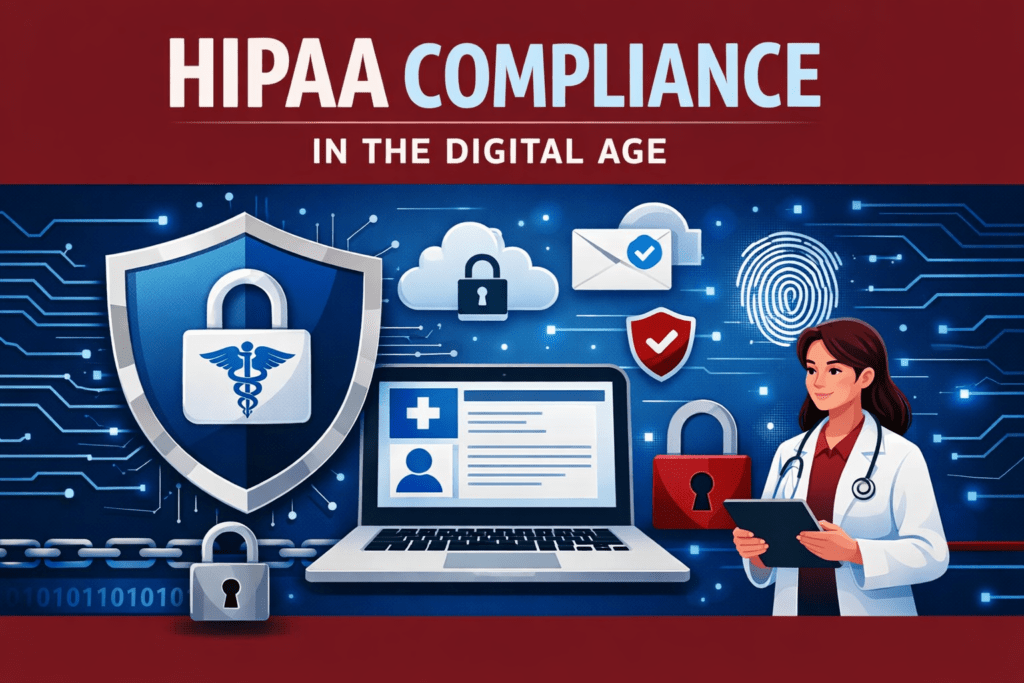
HIPAA Compliance in the Digital Age

Table of Contents Introduction Risks Strategies Conclusion The Health Insurance Portability and Accountability Act (HIPAA) was enacted long before the rise of telehealth, ubiquitous cloud storage, and sophisticated cyberattacks. Today, maintaining HIPAA compliance requires a modern understanding of digital risks. A single breach can result in massive fines and irrevocable damage to your practice’s reputation. Here’s your guide to navigating HIPAA compliance in the digital age. The New Frontier of Digital Risks: Telehealth & Remote Work: Video platforms and home networks must be secure. Cloud-Based EHR/PM Systems: You are responsible for your vendor’s compliance (they must be a “Business Associate”). Mobile Devices: Lost smartphones or tablets with PHI are a major liability. Phishing & Ransomware: Cybercriminals specifically target healthcare data. Essential Strategies for Modern HIPAA Compliance: 1. Conduct a Thorough Risk Analysis (Annually & After Changes) This is not optional. You must regularly identify where PHI is stored, transmitted, and received—especially across new digital channels—and assess vulnerabilities. 2. Fortify Your Business Associate Agreements (BAAs)Any vendor that touches your PHI (billing companies, cloud hosts, IT support) must have a signed BAA. This contract legally binds them to safeguard your data. 3. Implement a “Zero-Trust” Security MindsetAssume no device or network is inherently safe. Use: Strong encryption for data at rest and in transit. Multi-factor authentication (MFA) for all system access. Strict access controls based on the “minimum necessary” rule. 4. Train Staff RelentlesslyYour team is your first line of defense. Training must go beyond basics to cover: Identifying sophisticated phishing attempts. Secure practices for remote work. Proper use of encrypted communication and file sharing. 5. Prepare for the Worst with an Incident Response PlanAssume a breach will happen. Your plan must detail steps for containment, notification (to patients, HHS, and potentially media), and recovery to minimize damage. The Bottom Line: HIPAA compliance in the digital age is an active, ongoing process, not a one-time checklist. It’s about building a culture of security where technology, policies, and people work together to protect patient trust. Concerned about your practice’s digital compliance? Our team specializes in secure, HIPAA-compliant medical billing. Let us handle the complexities of the revenue cycle so you can focus on patient care with confidence.

Revenue Cycle

Reducing Claim Denials: Top 5 Strategies

Table of Contents Introduction Strategies Conclusion Claim denials are more than a nuisance—they’re a direct hit to your practice’s financial health. The American Medical Association estimates that one in five claims is initially denied, consuming countless staff hours to rework. The key is not just working denials faster, but preventing them from happening in the first place. Implement these five proactive strategies to reduce your claim denial rate and streamline your revenue cycle. Strategy 1: Front-End Scrub with Intelligent Software The best place to catch an error is before the claim is ever submitted. Invest in practice management or billing software with real-time claim scrubbing. These tools check for coding errors (CPT®/ICD-10 mismatches), missing information, and eligibility issues as you code, acting as a safety net for your billers. Strategy 2: Verify Eligibility & Benefits for Every Patient, Every TimeNever assume coverage is active. Conduct rigorous eligibility checks 24-48 hours before the appointment. Confirm:   Active insurance status Coverage for specific services Copay, deductible, and coinsurance details Need for prior authorizations or referralsThis prevents denials for “no coverage” or “service not authorized.” Strategy 3: Master Medical Coding & DocumentationInaccurate coding is a top denial driver. Ensure your coders and clinicians are aligned.   Provide Ongoing Coder Education: Keep them updated on annual CPT® and ICD-10 changes. Improve Clinical Documentation: Clinicians must document in detail to support the level of service (E/M) and medical necessity. Clear documentation is the foundation of clean claims. Strategy 4: Implement a Robust Pre-Authorization ProcessCreate a foolproof system for tracking and obtaining authorizations. Designate a point person and use a tracking log or software. A denied claim due to “no prior auth” is 100% preventable and often non-appealable. Strategy 5: Analyze Denial Data & Act on ItStop treating denials as isolated incidents. Track them by:   Denial Reason Code (e.g., CO-22, CO-109) Payer Provider Service TypeThis data reveals patterns. Is one payer consistently denying for a specific reason? Is one provider’s documentation lacking? Use these insights to target training and address systemic issues. The Proactive Payoff: By shifting your focus from denial management to denial prevention, you can significantly reduce your initial denial rate, improve cash flow, and free up your staff to focus on more strategic tasks. Struggling with a high denial rate? Our expert billing team specializes in proactive claim scrubbing, meticulous follow-up, and denial analysis to maximize your clean claim submissions and reimbursements. Contact us for a free revenue cycle assessment.

Coding

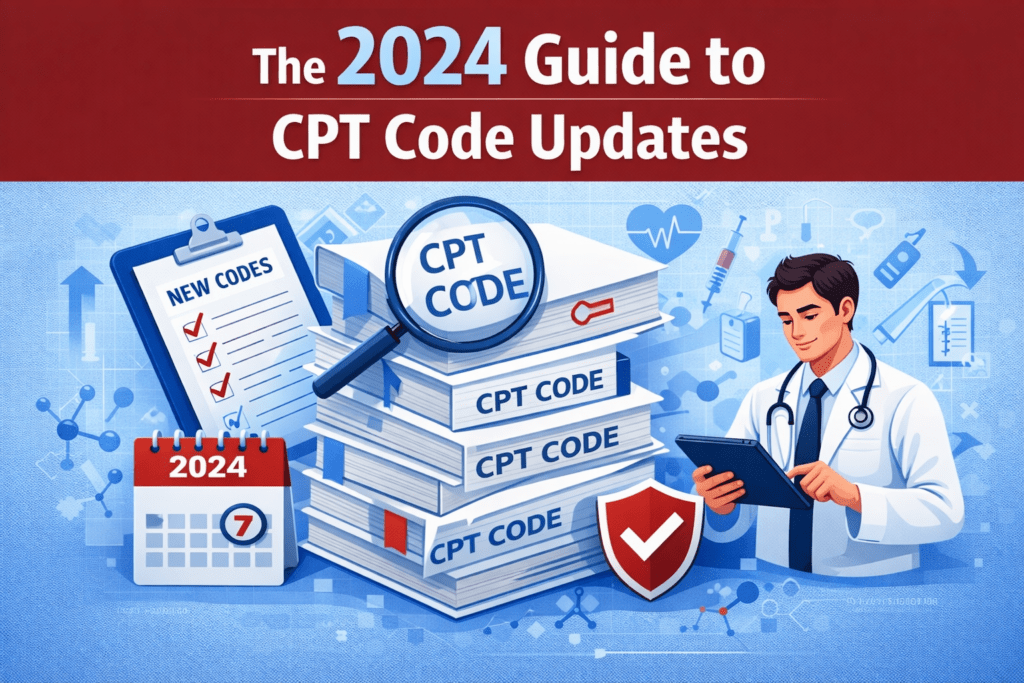
The 2024 Guide to CPT Code Updates

Table of Contents Introduction Themes Revisions & Deletions Steps Conclusion Each year, the American Medical Association (AMA) releases updates to the Current Procedural Terminology (CPT®) code set. Staying current isn’t just about compliance—it’s about ensuring your practice is accurately and optimally reimbursed for the services you provide. Here’s a breakdown of the critical 2024 CPT code updates you need to implement. Major Themes for 2024:This year’s changes heavily reflect the evolving healthcare landscape, with significant updates in digital health, prolonged services, and psychiatry. Key Additions to Know: New & Revised Prolonged Service Codes: The complex prolonged service codes (99417, 99418) have been deleted. For 2024, use: 99417: Prolonged outpatient evaluation and management (E/M) service beyond total time. G2212: New Code for prolonged inpatient or nursing facility E/M service beyond total time. Critical: Ensure your billing team understands the new time thresholds and reporting rules. Digital Health Expansion: The “Category III” telehealth codes are now permanent “Category I” codes, solidifying the role of remote care. 98980, 98981: Remote therapeutic monitoring (RTM) service codes have been revised for clarity. Continue to use 99453, 99454, 99457, 99458 for remote physiologic monitoring (RPM). Psychiatry Code Overhaul: The psychiatric evaluation and management codes (90791, 90792) have been deleted and replaced with new codes that align with the E/M office visit structure (based on medical decision making or time). 90885, 90887: New codes for psychiatric diagnostic evaluation. 90889, 90890: New codes for interactive complexity. Maternal Care Services: New codes have been added for comprehensive postpartum care and cesarean delivery bundles to better reflect current clinical practice. Other Notable New Codes: 0604T, 0605T: Transcervical uterine artery embolization. 0651T: Ablation of malignant prostate tissue using high-intensity focused ultrasound (HIFU). Important Revisions & Deletions: Review changes to vaccine administration codes (90460, 90461). Codes for hydration (90760, 90761) have been deleted. Pay close attention to revised descriptors for many surgery and radiology codes. Action Steps for Your Practice: Update Your Systems: Ensure your EHR, practice management, and billing software have been updated with the 2024 code set. Educate Your Team: Provide mandatory training for both clinicians and coders. Accurate documentation drives accurate coding. Review Superbills: Update all patient-facing superbills and encounter forms immediately. Consult Your Biller: Work with your in-house or outsourced billing team to understand the impact on your most common services. Conclusion: Failing to implement CPT updates can lead to claim denials, delayed payments, and lost revenue. Proactive adaptation is key to a smooth and profitable revenue cycle in 2024. Need help navigating the 2024 coding changes? Our certified medical coders and billing specialists are always up-to-date on the latest regulations. Partner with us to ensure your coding is accurate, compliant, and optimized for maximum reimbursement.

Scroll to Top

Established Practice

Startup Practice